
Oregon Area Historical Society & Museum
Upcoming Events

Veteran’s Day at the Senior Center

Wisconsin World War II – Home Front
Notes from the Museum

Greetings Oregon Area Historical Society & Museum followers! My name is Heather Young. I am the publicity coordinator for the OAHS and museum, update the website and Facebook, member of the Tuesday Crew and the current Board President.
In this section of the homepage, I will share future events, summarize past events, talk about interesting bits of history and touch on things going on at the museum.
Happy September History Lovers!
With school starting, we are back to our fall/winter hours. We are always open every Tuesday from 10am-3pm but are only open on the first Saturday of the months from 9am-12pm until the end of May. We are also open by appointment.
Our next big event will be Retro on the River over in Stoughton with the Stoughton Historical Society and Friends of Downtown Stoughton. It is a vintage sale so come down on Saturday, September 12th from 9am-4pm to see what everyone has to sell. I have word that an authentic DeLorean, a restored replica of the Back to the Future DeLorean, will be there at 2pm.
Our friends over in McFarland will be hosting a 370 years of fashion show fundraiser on Saturday, September 19th and Sunday, September 20th. For more information, please visit McFarland Historical Society website. It looks like it’s going to be so much fun!!!
Our friends at the Dane County Historical Society will be hosting a program on Saturday, September 26th titled “UNJUST DEEDS – The History of Racial Covenants in Dane County and Beyond” on SAT 9/26 · 2PM · Monona Community Center · 1011 Nichols Rd · Monona, WI. For more information, check out their website.
We have a new way to renew this year! You can learn more about it on our Become a Member page here on our website. We will still be doing in-person and USPS mail renewals but we are trying out online renewals this year. So go to our Support page and check it out. I think it’s pretty easy and clear cut. Always remember that if you have any questions about your membership, you can reach out to me via oahs.publicity@gmail.com. Remember that most emails coming from the museum will either be coming from me (Heather Young) at the above email or our Museum Coordinator.
I’ve updated our Historic Oregon News. You can find it below this section.
Don’t forget that we are open every Tuesday from 10am – 3pm and every Saturday from 9am – 12pm. We are also open for private tours upon request (and if we have a volunteer who can come in that day). Come see us!!!
I think that’s all for now. Stay cool out there Oregon! And enjoy the rest of your summer!!!
~Heather
Historic Oregon News
August 1951
Otteson Named Manager of This Area for Sinclair
The Sinclair Refining Company has leased the Wisconsin Petroleum Company of Stoughton effective August 1st.
Odin A. Otteson, Oregon, who has been an employee of the Wisconsin Petroleum Company for the past twenty-four years, has been named local manager of the Stoughton and Oregon area for the Sinclair Refining Company.
Mr. Otteson, wife Marvel and daughter Marilynne Odette, live at 121 W. Lincoln St. Oregon. Mr. Otteson is an active member of the Oregon Fire Department and is interested in other civic activities.
Comparing 1932 Prices with Those of the Present
The extent to which prices on meats and groceries have climbed skyward since 1932 is hardly believable. However, to present undisputable facts, F. E. Madsen gave us a sale bill which he printed on October 15, 1932, and we are herewith producing the prices quoted in the bill together with present day figures on the same articles.
The first column is the 1932 figures while the second column is present prices:
Veal chops, lb. ……………….12c 85c
Veal shoulder, lb………………9c 70c
Veal stew, lb…………………….9c 55c
Pork shoulder roast, lb…….13c 55c
Blue Ribbon round and
Sirloin steak, lb……………….16c 90c
Choice beef shoulder, lb…. 13c 70c
2 Pounds frankfurters with
one quart sauerkraut free…25c 1.30
Old Fashioned strong New
York cheese, lb…………………24c 80c
Yellow cream cheese…………16c 35c
10 lbs. Cane Sugar…………….47c 1.00
Large can of pumpkin…………5c 28c
Prunes, large size, lb………….7c 29c
Tomato soup, per can…………6c 12c
Gold Bond Coffee with one
Water glass free…………………33c 90c
5 pounds self-rising pancake
flour for ……………………………19c 49c
Four rolls toilet paper…………25c 35c
50 cent broom……………………30c 1.59
5-pound box of soap chips… 23c 1.20
Soldiers Grove in Plea for Help
On Saturday, July 24, the Village of Soldiers Grove, a community with a river winding through it, much like yours, was hit by the worst flood in its history. The backlash of a tornado which struck in the north had dumped an average of eight inches of rain over the entire upper river valley in a four-hour storm. When the tremendous run of this rainstorm crashed into Soldiers Grove it came as a wall of water 20 feet high. The complete stock of every business in Soldiers Grove was a total loss.
Although the merchants had insurance including use and occupancy policies, the losses were not covered. If you check your own policies, you will see why. Each policy contains a clause which frees the insurance company from liability where rising water is concerned.
Many of the merchants and businessmen, just like those in your community had their entire life savings tied up in their business. Others were just getting started and had taken out loans against the buildings and fixtures.
It will take at least $500,000 to enable Soldiers Grove to live again. It will have to come in dollar bills and five-dollar bills, from hundreds of thousands of people who can thank God that the rainstorm was not “upriver” from their community.
Assemblyman Rodney Satter of Prairie du Chien, a representative of Crawford County, in which Soldiers Grove is located, has made the following plea on behalf of the residents and businessmen of the little village. The village is in danger of being permanently disintegrated. Satter’s plea for help has been sent throughout the area.
State’s Migratory Workers to be Served by Church Unit
During your travels over the highways and byways of Wisconsin this summer don’t be surprised if you should see a station wagon and an alert young woman surrounded by children or grown-up workers as she conducts school classes, referees a volleyball game, shows a motion picture, or conducts an old-fashioned songfest.
The chances are that it will be Della Cross pursuing her seasonal job of bringing educational, recreational and spiritual guidance to the many migratory farm workers and their children who harvest Wisconsin’s crops each season.
This is not an isolated unit, explains Rev. Ralph Austin of Waupun, chairman of the Wisconsin Community Migrant Committee, but one of ten that will cover 25 states conducting school classes, organizing recreational activities, leading church services or acting as counsel to the 2,500,000 migratory workers who harvest America’s crops every year.
The project is sponsored by the Home Missions Division of the National Council of Churches representing 22 Protestant denominations working closely with state and local councils of church and church women.
McCann – Sheil
The marriage of Miss Janet McCann, daughter of Mr. and Mrs. Chas. McCann to Jack Sheil, son of Mr. and Mrs. John Sheil took place at nine o’clock at the Holy Mother of Consolation church, Rev. Fr. Sylvester Van Berkel reading the service. For the occasion the altar was banked with gladioli. Mr. McCann gave his daughter in marriage and her sister; Miss Mary Alice McCann attended as her maid of honor.
Edgar Egan acted as best man and the ushers were Gary and Phil Sheil, brothers of the groom. Soloist for the wedding was Miss Mary Devine.
The bride’s gown was of white taffeta, featured a fitted bodice, scalloped net yoke, long sleeves and a net over skirt and train. She wore a fingertip veil of illusion which was caught to the sweetheart shaped crown. Her white prayerbook carried two white orchids with streamers of Stephanotis.
Following the ceremony a wedding breakfast for the wedding party and immediate families were given at the Richardson tearoom and a reception for 150 guests was held at the McCann home. Assisting at the reception were Mrs. Donald Clayton, Mrs. Robert Newton, and Mrs. Roger Lawry.
For travel, the bride wore a yellow suit with brown accessories.
Lake Mendota Reported as Prolific Fish Producer
For years Lake Mendota at Madison has had phenomenal perch fishing. Apprehensive fishermen predicted dire consequences of the year-round season. Early this year some perch addicts announced that the big perch had been “fished out” and only little ones remained. And now perch fishing is better than in any year of Mendota’s history. It is an amazing story. The lake has a number of perch beds at a depth of about 45 feet of water and when the weather permits there are a hundred boat loads of people over each. And everybody gets his limit of 25 perch as a matter of course. These people have fun catching perch but there is an economic angle. On any nice day, Lake Mendota is producing about 5,000 pounds of perch, two tons and a half. Retail value of this food is in excess of $2000.
Besides the fish being caught and kept Lake Mendota this year has an enormous population of younger age classes of perch. There are countless millions of six-inch fish that promise to be of an appealing size next year if they have room to develop. Fishermen are shaking their heads at the apparent overabundance.
Did You Know
These facts aren’t generally known by Americans, but according to a reliable Washington authority, we pay to protect others. (1) The South Korean government charges us between five and ten million dollars monthly to use their national railway. We pay freight charges, rent cars and locomotives, buy fuel, maintain and repair roadbeds, provide part of the crews, and send locomotives to Japan for repairs. Only hospitals trains travel without charge. (2) Under an agreement negotiated by our state Department, Britain makes a “service charge”, against us of $95 a year for every American soldier in uniform in England. (Actually, our men live in American built barracks). Similar “agreements” are being negotiated by our State Department with other European nations.
Random Shots
The philosophers who used to gather around the cracker barrel now prefer one with a spigot in it.
Progress will always involve risk. You can’t steal second base and keep one foot on first.
The scars of war soon heal, says a writer, but congress will never forget the new sources of revenue discovered.
Any father soon knows how little he knows when his child begins asking questions.
When you’re in the tub or taking a nap, and the call turns out to be a wrong number, profanity is excusable.
August 1976
Community Bank Holds First Meeting
The first annual meeting of the newly organized Community National Bank in Oregon was held on July 29th at which time shareholders elected the following directors: Andrew J. Anderson, Marlin P. Bavery, Wilfred J. Berman, Donald Doyle, Robert C. Everson, George A. Fait, Paul Kohlman, Roger Segebrecht, Harry Tobias and Ray Tomlinson. Tobias and Tomlinson are from Madison, Segebrecht is from Stoughton, but operates a business in Oregon, and the remainder of the directors are from Oregon.
At a subsequent meeting of the directors, Doyle was named as Chairman of the Board; Anderson was named President; Kohlman, Vice President; and Segebrecht, Asst Cashier.
The Board also named Gerald R. Luebke as Cashier of the new bank. He is presently assistant cashier and loan officer at Farmers’ Bank, Milton, Wisconsin. He was a graduate of Milton College in January of 1973 and served three years in the U. S. Marine Corps. His wife, Ann, is a schoolteacher in the Milton school system. He is also president of the Milton Junction Shopping Association, president-elect of the Milton Kiwanis Club, and secretary-treasurer of the Rock County Bankers’ Association.
As previously announced, a tentative date for the opening of the bank in a temporary facility has been scheduled for September 15th of this year. The facility will be located on the building site for the new bank at 733 North Main Street, directly across from the Oregon Clinic. Plans for the building are being completed, and construction is expected to begin by September 1.
Oregon Summer School Program
Children enrolled in the Oregon Summer School Program were treated to a special performance by Kinder in a Dramatic Society (K.I.D.S) Participation Theater on Wednesday morning, July 28. There were two performances to accommodate all the children in the program.
K.I.D.S. Participation Theater is a professional children’s theatre troupe from Madison. As the name indicates, K.I.D.S.’s performances feature audience participation. On Wednesday morning, the troupe presented their first performance of a new play named “When I Grow Up”. The play is taken from an original script written by the members of the troupe. It tells a story from the childhood of two remarkable Americans: Elizabeth Blackwell, the first woman M.D., and Woody Gurthrie, a famous folksinger and composer of “This Land Is Your Land”.
Every child in the audience was given the opportunity to participate in the action of the play. For example, many children entered into the discussion of whether Elizabeth Blackwell should be allowed to remain in her first anatomy class. Others rode in a freight train boxcar with Woody Guthrie and helped him cool down a fight by singing “This Train is Bound for Glory” and other songs.
Teachers in the Summer School Program were able to prepare their students for their participation in the performance with the aid of a “Teacher’s Guide” that K.I.D.S. Theatre provided several days before the show.
Kinder in a Dramatic Society has performed extensively throughout southern Wisconsin. Recently the troupe returned from Milwaukee’s Summerfest where the Milwaukee Journal reviewed their 12-day stay as “the best part of the whole Children’s Area”.
St. John’s Lutheran Church Break Ground
Work continues at the site of St. John’s new Education Unit being built on East Netherwood Street. Completion of the building is scheduled for the end of November.
The building consists of one large multi-purpose room which will be used for Sunday School rooms and serving facilities, self-contained nursery and kindergarten areas, and offices for the church secretary and pastors. The kitchen for the new building is being roughed in and will be completed at a later date. The Women of St. John’s are raising money to help furnish the kitchen.
Vogel Brothers, Madison, are the contractors for the new building
Town of Dunn Produces History and Tour Brochure
Being distributed to Town of Dunn residents is the attractive little, blue-covered history and tour guide brochure, the end-product of the Town of Dunn Bicentennial Committee’s year-long project. Started in April of 1975, the 40-page brochure came off the press this July ready for distribution. The Oregon High School graphic arts department, under the direction of Skip Bohse, printed the brochure with all of the sketches in the booklet done by students at the Oregon High School advanced drawing class. Paul Waite directed the artwork. Melody Schmidt sketched the old pump for the cover design.
The brochure features line drawings of old homes in the township, copied from photographs taken by Lorraine Hawkinson, committee member. The centerfold features a map of the township with locations of old homes designated and the tour of the town outlined. Photos of the old homes will be displayed at the town hall.
Ruth DeWitt is chairperson of the town’s Bicentennial Committee. Fourteen hundred copies of the brochure were printed and are being distributed at the present time by committee members and volunteers. Older homes of the community are featured in the booklet as well as the history of the township. The booklet and a town Bicentennial festival picnic, which featured a bus tour of the township, comprised the year-long efforts of the Bicentennial Committee. Residents who have not received their copy of the brochure are asked to call the town hall and copies will be mailed out. Postage charges are twenty-five cents per copy.
Paul’s Supermarket Weekly Specials
Pears – 29 cents/lb
Grapes – 69 cents/lb
Armour Bacon, 1 lb. pkg – $1.49
Orange Juice, 64 oz. jar – 69cents
Coke, 16-oz bottles – 8/99 cents
Richelieu 16-oz. Cut or French Style Green beans – 4/$1.00
Dean’s 1% milk, gallon – $1.09
Bank of Oregon Bicentennial Glassware Offer
Free with a $500 deposit – your choice of an apothecary jar, ice tub with tongs, 12-oz or 13-oz tumblers (set of 4), or 9-oz, 11-oz or 12-oz old fashion glasses (set of 4).
Free with a $1,000 deposit – your choice of 7.5 oz. or 11 oz. stemware goblets (set of 4); 17-oz, tankards (set of 4); a 6-piece cocktail set; or a 5-piece wine set.
Glasses and other items are available in Liberty Bell design or the official Bicentennial Emblem design. Additional sets may be purchased at substantial savings. One free gift per account per promotion. Offer good for a limited time only. Deposits must be made in either a 1-year maturity or a 2-1/2-year maturity Certificate of Deposit or Golden Passbook Account.
Stop in now… and receive a truly, attractive lasting memento of our country’s 200th birthday.
Park Rest Room Facility Nearly Done
The new restroom facility at the Oregon village park grounds just off Brook Street, south of the shelter house, is nearing completion at a cost of approximately $26,000. The Oregon Chamber of Commerce, as a result of a decision made two or three years ago, gave the village $7,000 toward the structure, and the local Jaycees have pledged $5,000, and are putting on fund-raising events toward the cause. The balance of the cost is absorbed by the village. The building consists of men’s and ladies’ restrooms, an open area under the roof and a storage area for park recreation equipment.
Summer Drivers’ Ed Program
The summer driver education program is coming to an end with approximately 140 Oregon students completing the course. Two instructors were employed by the school district, Dave Batist, Madison, and Erwin Kissling, Oregon.
This course is offered to all students living in the district who are nearing the age of sixteen (driver license age). Two cars were in use throughout the summer with both cars being supplied by Lappley Chevrolet of Oregon, as they do throughout the year. Each summer, the district also offers the classroom phase of driver education in which 20 students participated this year.
As an item of interest – over 10,000 miles were driven by the groups of students during June and July.
Surprise Birthday Party Honors Mrs. Minch
Sunday August 8 was a big day for Mrs. W. B. Minch of 437 N. Main Street, Oregon. Mrs. Minch is affectionately called “Ted” by her many friends. After having dinner at the local Waterfall Restaurant with family members, she was completely unaware of what was to follow later that day when they returned home. Good friends, neighbors and relatives began arriving as a complete surprise to Mrs. Minch, who had no idea what was happening until the middle of the afternoon.
The party was in recognition of her 80th birthday anniversary on August 5 and had been planned and arranged by her son and daughter-in-law, Mr. and Mrs. Bill Minch and family, at Addison, Illinois weeks before. They reached her Saturday to prepare for the special event, and everyone kept it a well-guarded secret. It was done so well, Mrs. Minch had no inkling. She is still wondering where the beautiful big birthday cake and refreshments were hidden.
Approximately 75 well-wishers joined in the celebration. Guests came from Oshkosh, Stoughton, Albany, Wisconsin Dells, Oregon, Madison, Los Angeles. My nephew, Bill Mahoney, from Washington DC, a cadet at West Point Military Academy, also attended.
One of the highlights of the party that pleased Mrs. Minch very much was the presence of another long-time North Main Street resident and dear young-at-heart friend, Mrs. George Litch, who celebrated her 91st birthday July 4th of this Bicentennial year.
Mrs. Minch, one of Oregon’s best-known senior citizens, has resided in the village since 1946. Her late husband, Bill, who died in 1958, was a mail carrier.
A former nurse, she is a warm and gentle person and possesses a wealth of friends. Her health is quite good and she likes to visit, travel, play cards, do her own washing and cooking, most of her own housework, keeps active, and doesn’t look her age.
She received many remembrances in honor of her birthday anniversary—gifts, cards, corsages, flowers and plants, and had a marvelous day. She is, however, still somewhat puzzled as to how it all happened so efficiently and confidentially, with not even a hint of suspicion in any way on her part. The surprise was perfect!
No More Thru Traffic on School Property
Notice has been issued that the street which runs along the side of the junior high school and middle school, will no longer be a thorough street to the public and will be closed to traffic. However, the parking lots will still be open, but if you come into the parking lot off North Main Street, you will also have to exit the same way you came in. Also, if you come into the parking lot from the north on Soden Drive, you will have to exit the same way you came in. This will go into effect before school begins on August 25th.
The Letter
This letter was received by a Church Council Member who read the following letter to the combined congregations of the Brooklyn and Cooksville Lutheran Churches:
August 13, 1976
Janesville, Wisconsin
This letter comes to you as we are in the middle of packing and moving to our new home in Cleveland, Ohio, where my husband has been offered a new position in the clothing industry.
Earlier this summer, our son was saved from a sure and certain death at the Lutheran Bible Camp. The man who saved him was your pastor, Cyril Jandry. We felt that we just must get this letter off to you before leaving here.
From the facts that we have been able to ascertain, the lifeguard at Lutherdale had called all of the young people in from swimming because of an approaching storm and rough waters. Then, during the supper hour your pastor passed up supper and was somewhere on the hillside overlooking the lake.
At that particular time our son, wishing to prove his ability to swim, was trying to swim to the raft and because of the rough waters and high winds, got off to the side and was going under several times when he called for help.
Your pastor raced down the hillside and fully clothed, jumped into the rough, swirling waters and swam out to our son. Our son was already unconscious and turning blue at this time. According to a staff counselor, who came running out of the dining hall upon hearing the commotion, your pastor was working on our son for all he was worth, pushing the water out of him, trying to bring him back to consciousness. Finally, our son gave out a cry, and they knew he would probably live.
We were called in and took our son to the hospital immediately, where he underwent observation and treatment for three days. The doctor there said that another ten seconds may well have spelled death for our son.
I wonder if the people of your parish understand what a heroic, unselfish man they have as their leader? One of the staff members at the camp said to us: “I don’t know how he came back alive…with that storm coming up and those waters as rough as they were. I am amazed that they both didn’t drown.”
He is our only son. Do you know what it is like to have your only twelve-year-old son given back to you?” We telephoned your pastor—we wanted him to have some reward for this, but he would not accept it.
How can we show our appreciation? How can we leave, we must do something –we simply must do something. So, I send this letter to you, hoping you will read it to the members of your parish, and tell them of the deep admiration we have for men like that. We are reminded of the scriptures that say;
“Greater love hath no man than this, that a man lay down his life for another”
May God bless your people and your wonderful, unselfish pastor.
August 2001
New School
Preparations for the upcoming school year at Rome Corners Intermediate School is reaching a frenzied climax, as the start of classes is only two weeks away. According to Jan Bonsett-Veal, Rome Corners principal, much is left to be done but the school will be ready when the kids walk through the doors on August 27th.
Study Looks at Oregon
County considers village for future bus and commuter rail lines
Although any move by Madison officials to extend commuter rail to the outlying communities of Dane Couty is still years away, Oregon has not been ruled out as a future destination.
“With all the growth we’re looking at (on the village’s northwest side), we know that at some point it will be beneficial for residents in the area to have commuter rail,” said Village President Jerry Luebke. “But we’d have to show we have the need and the ridership to make it viable to come out here.”
Oregon Athlete First in State
Jake Casper of Oregon will be among the first of more than 9,000 Special Olympics athletes in the state to go beyond batting a home run, bowling a strike or making a hole-in-one. Casper is one of 22 athletes to become an official, “Global Messenger,” an initiative that is placing athletes with microphones in hand for community presentations, live media interviews and other leadership roles in addition to that of a “sports competitor.”
Casper has been involved with Special Olympics for three years and takes part in bowling, basketball, track and field and swimming.
Genesis Marks 30 Years of Helping Oregon’s Elderly
In 1970, thanks to a number of visionary people, the Genesis Corporation was founded. It’s guiding principle then, as now, was to “help the elderly.”
In 1971, the corporation built its first facility in Oregon. Now, 30 years later, there are four facilities in Oregon and Brooklyn, with a total of 76 rental units. All the units house elderly, disabled and handicapped renters.
“We have to pay special homage to the area people who had the foresight to envision this.” Said Lyle Wanless, who started as a board member and is now general manager of the corporation. “It all started when a number of Oregon and Brooklyn churches saw the future need to house the elderly and went to work on it.”
Wanless said it would be impossible to remember all those who should share the credit, but he was able to recall some of them, including Alan Riese, Bud Sholts, Ray Lawry, Ruth Swanson, Norm Champion, Muriel Stoneman and two people now deceased, Chuck Cell and Al Gasner who was the former general manager of the corporation.
Chamber Welcomes New Member
Stoughton Hospital has opened a satellite clinic, the Stoughton Hospital
Rehabilitation and Sports Medicine Clinic, at the Oregon Sports and Fitness Center Club. The purpose of the clinic is to provide a local option for individuals who are in need of physical and occupational therapy, and sports medicine treatments. The Clinic opened on July 23rd, and appointments are available Monday, Wednesdays and Fridays from 8:00 a.m. to 2:30 p.m.
Jodie Poe is the primary physical therapist at the clinic in Oregon. She is the daughter of Tom and Sally Mueller and is a 1983 Oregon High School graduate. Jodie has 15 years of experience in orthopedic and sports medicine physical therapy. Occupational and speech therapy are also available on an as needed basis.
Historical Society Seeking Donations for Garage Sale
The Oregon Historical Society will hold a garage sale Saturday, August 25th from 8 a.m. to 3 p.m. at the Historical Society Museum.
Donations are being accepted for the sale and can be brought into the museum on August 22-24 from 10 a.m. to 3 p.m.
The sale is one of the Historical Society’s biggest fund raisers, according to Melissa Destree, society president. The Society will receive a matching grant from the Aid Association of Lutherans for all funds raised.
In addition to the sale, there will be a bake sale and raffle. The museum will also be open.
Area Women Pulling for World Title in Japan
Six of the best women’s tug-of-war teams in the world, including a U.S. team with five area members, will meet at the World Games in Akita, Japan for a grueling two-day title match on August 25 and 26.
One of the members is Shelby Richardson, an Oregon resident, who is captain of the Oregon area tug-of-war team. She will be accompanied by Linda Berry of Madison, Chris Woodard of Beloit, Amy Beuscher of Hollandale and Donna Witt of Brodhead. Other team members are from the Minneapolis area. The 11 team members will combine in various ways to make up two teams in different weight classes. Most members will be on both teams.
What makes Richardson’s involvement particularly interesting is her age. At 44, she is about 20 years older than most of her teammates. “I didn’t have any intentions of being in the games, but then Bill Gallagher, coach of the U.S. team said he needed my experience.” She went on to explain that since Memorial Day, when it was decided that she would be on the team she has been fighting to get back into shape.
Get Involved
Visit
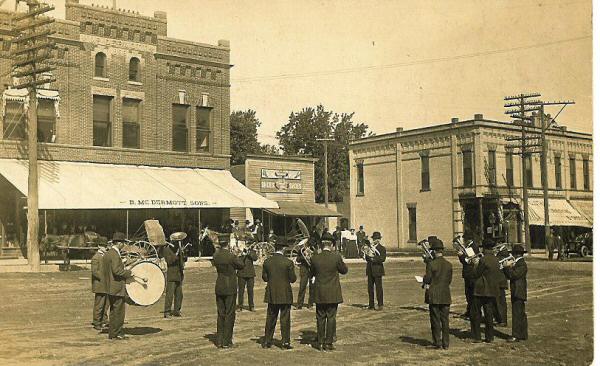
We collect, preserve, and display local historical artifacts. Visit the Oregon Area Historical Society Museum and learn about our history.
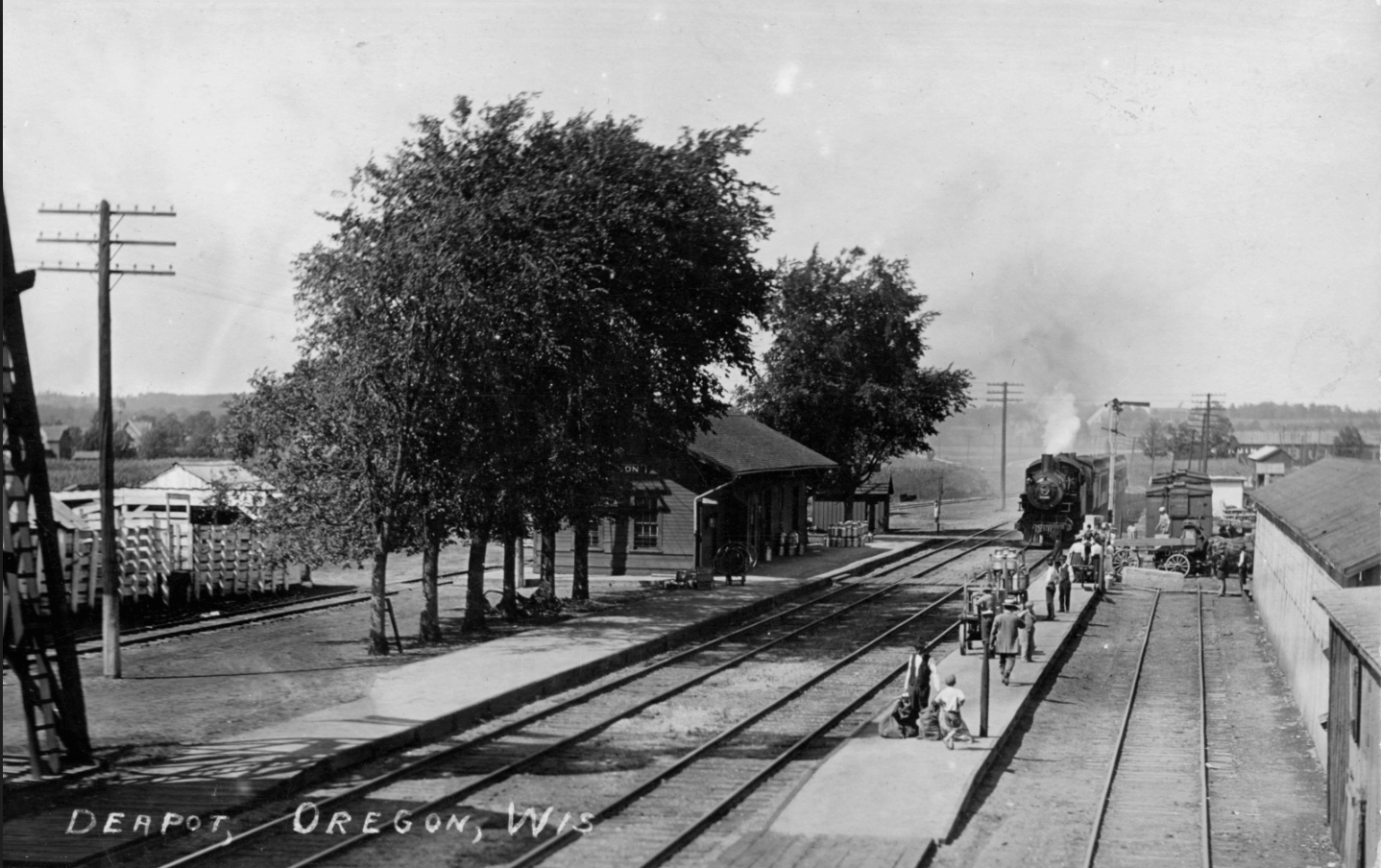
Donate
The Oregon Area Historical Society & Museum is a 501(c)(3) Non-Profit and all donations are tax deductible. Thank for supporting us!
Join our Team
Oregon Area Historical Society & Museum is 100% run by volunteers. We have volunteer opportunities with varying levels of commitment!